

There's still time to enter the Regenerative Garden Awards in 2026, and help shape them for 2027
Ask any gardener whether their garden is finished, and you'll probably get a laugh. A garden is never done. It grows, it changes with the seasons, it surprises you, and it asks something of you every year. A hedge needs cutting back, a compost heap needs turning, and a patch of bare soil is crying out for mulch. A garden is a living thing, and it only thrives when someone keeps showing up for it.
That's exactly why we created the Regenerative Garden Awards (RGAs) the way we did.
Your garden could be a mini climate, health and nature project
We often talk about climate change as something too big for any of us to touch. But some of the most powerful climate tools are right outside the back door.
Every garden is a small piece of land that can store carbon, hold water, feed wildlife and grow healthy food. Look after it in the right way, and your garden becomes your own mini climate project.
As Woody Harrelson puts it in the film Kiss the Ground: “The very practices that heal our soils will also heal our climate.”
Not a trophy for the shelf
Think of a Michelin star. It isn't a lifetime achievement award that a restaurant wins once and hangs on the wall forever. It has to be earned, and then earned again. Inspectors return, standards are kept, and a star can be gained, held or lost. That's what gives it meaning.
The Regenerative Garden Awards work in a similar spirit, but with a gentler, more encouraging heart. Gardens can earn a Bronze, Silver or Gold award by meeting clear criteria that help nature, people and the climate: composting, keeping soil covered, growing native plants, making space for wildlife (including a gap for hedgehogs), avoiding slug pellets and harmful sprays, and growing some of your own food. There's also a container award for anyone growing in pots on a balcony, patio or doorstep, so you don't need a big garden to take part.
An award isn't the finish line. It's a snapshot of a garden on its journey. A Bronze garden this year might be a Silver garden next year, once the hedgehog house is a home, the peat-free compost becomes a habit, and the native shrubs have bedded in. And Gold could follow, once there's biochar in the soil and you've started thinking about your veg plot differently. Like a garden, an award is something you tend. It grows with you.
It starts with the soil
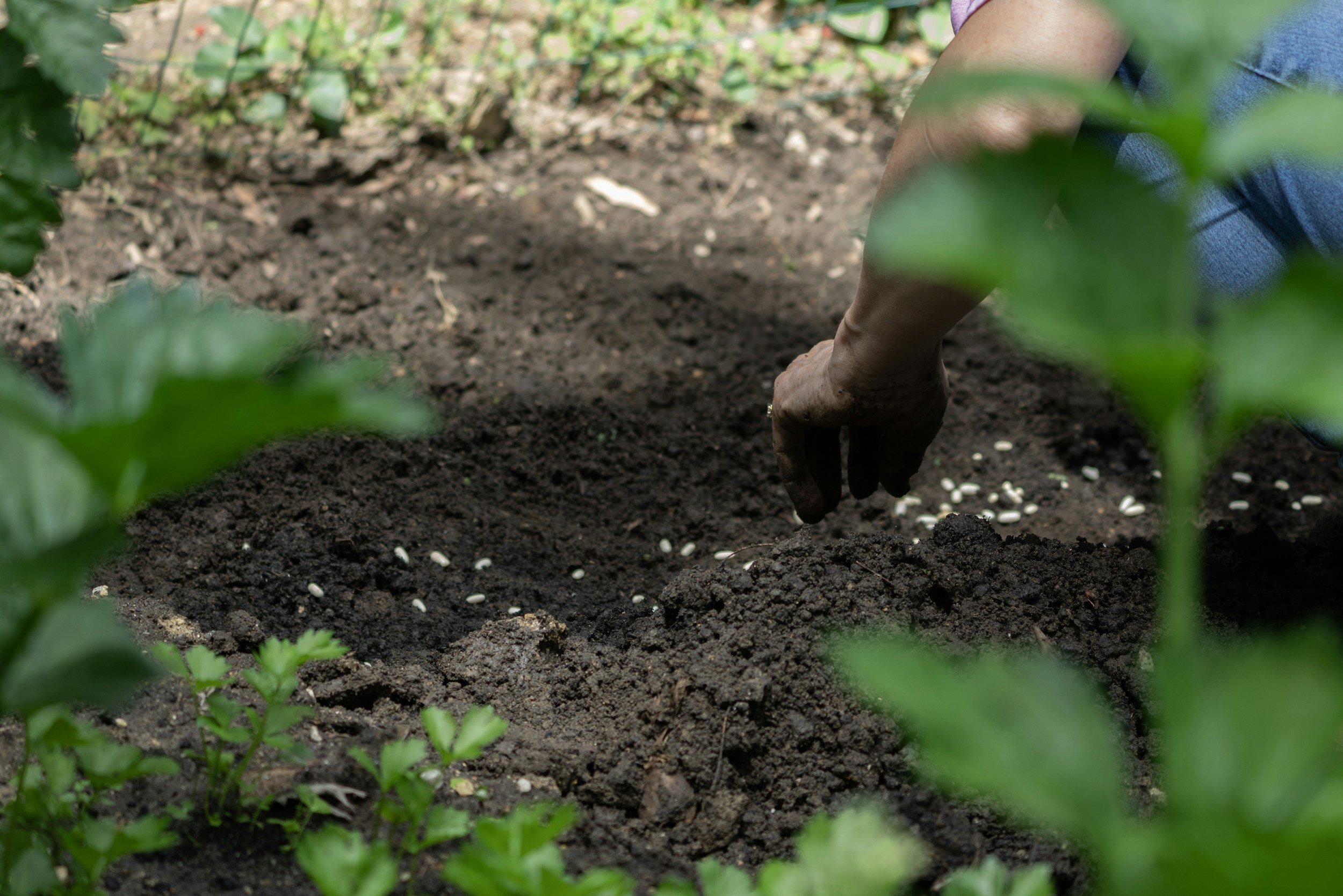
Healthy soil is alive. It's full of fungi, worms and countless tiny organisms that feed plants, store water and lock carbon away underground. And the soil we grow our food in directly affects how nourishing that food is. When we look after the soil, we're looking after ourselves and our climate at the same time.
That's why our awards reward the simple habits that build living soil. Composting turns kitchen and garden waste into rich organic matter instead of sending it to landfill. Keeping soil covered with plants or mulch protects it from drying out and washing away. Choosing peat-free compost leaves peatlands, one of our most important natural carbon stores, in the ground where they belong.
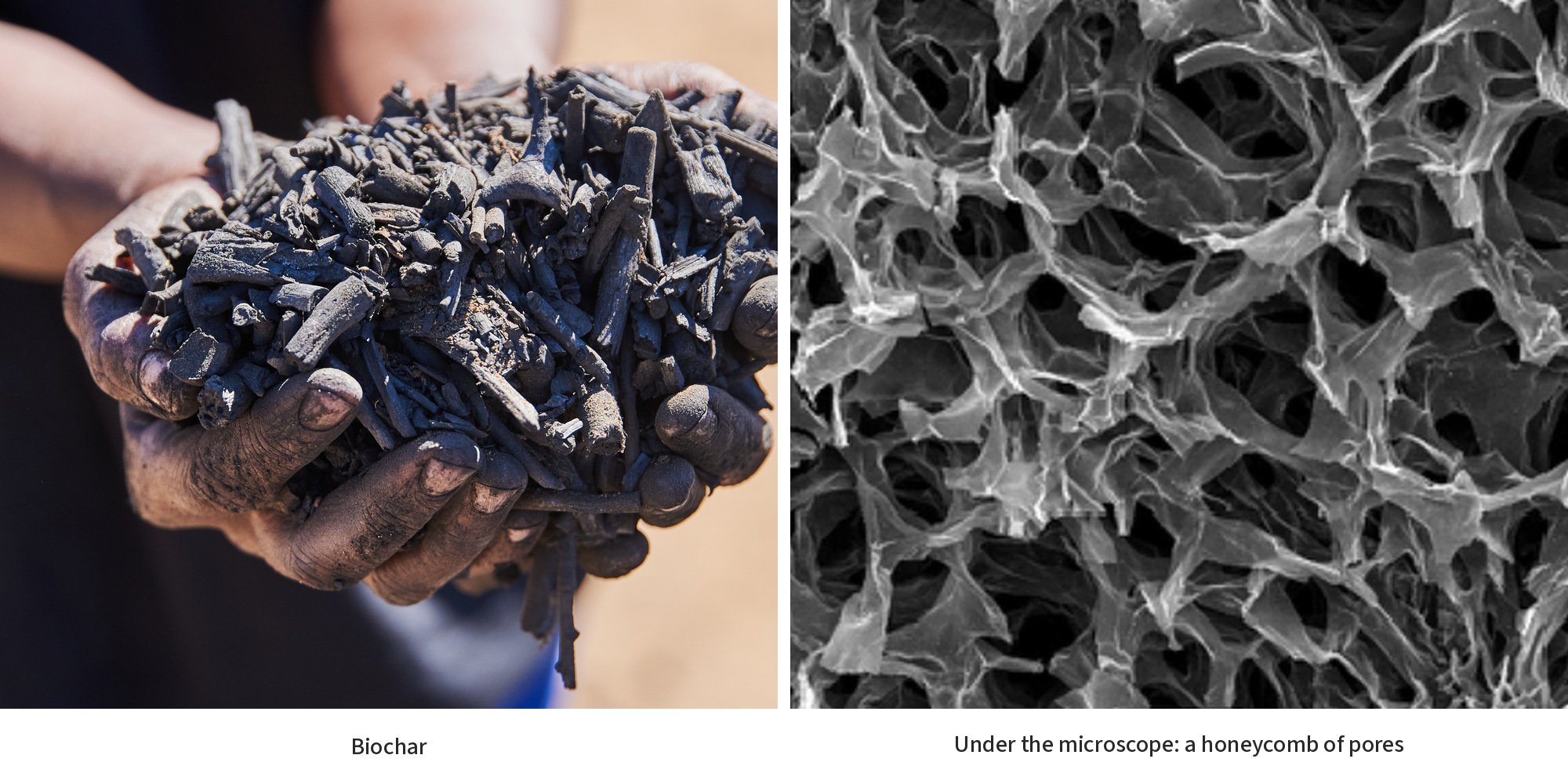
Left: Tim Brunauer / GIZ, Wikimedia Commons, CC BY-SA 4.0. Right: adapted from Wang et al. (2025), Carbon Research 4:10, CC BY 4.0.
Biochar: a carbon store you can dig in
At Gold level, we ask gardeners to use biochar. Biochar is a kind of charcoal made by heating wood or plant waste with very little oxygen. Normally, when plant material rots or burns, its carbon goes back into the air. Turning it into biochar locks much of that carbon into a stable form that can stay in the soil for hundreds of years.
But biochar isn't just a carbon store. Its honeycomb structure gives soil life somewhere to live and helps soil hold onto water and nutrients. Fresh biochar is like an empty sponge, though, so it's best to "charge" it first. That just means filling it with nutrients and microbes before it goes in the ground. The easiest way is to mix it into your compost heap, or soak it in liquid feed or compost tea, for a few weeks. Then dig it into your beds, and you're feeding your soil while taking carbon out of the atmosphere. It's one of the most hands-on ways any gardener can play a part in tackling climate change.
Imagine the impact!
Picture a street where one family enters the awards. They leave a corner wild, cut a hedgehog gap in the fence and start a compost bin. Their neighbour notices and asks about the certificate in the window. The next spring, three more gardens on the street enter. Children are counting the butterflies. Someone sets up a seed swap. Someone else starts making biochar from garden prunings and shares it around. The hedgehogs now have a route through the whole street.
Now picture that happening across a village, a district, and then the whole country. Thousands of mini climate projects, each storing a little carbon, soaking up a little rain, and feeding a little more wildlife, add up to something big. That's the future we're working towards: a network of gardens that are healthier for wildlife, for soil, for the climate, for the food we grow and for the people who tend them. It also supports our mental health and wellbeing, and gives young people a place to learn how nature works.
There’s still time to enter in 2026, and to help shape the awards in 2027
2026 is our pilot year, so if you enter before the end of December, you'll be one of our founding gardeners. Your entry and your feedback will directly help us shape the awards as we grow them across the country in 2027 and beyond. Tell us what worked, what was tricky and what you'd change. Like any good garden, these awards will keep improving with every season.
Winter is also the perfect time to plan. Walk around your garden, see where it stands today, and set your sights on the next level.
